1. Core reason why customers feel acetate frames are overpriced
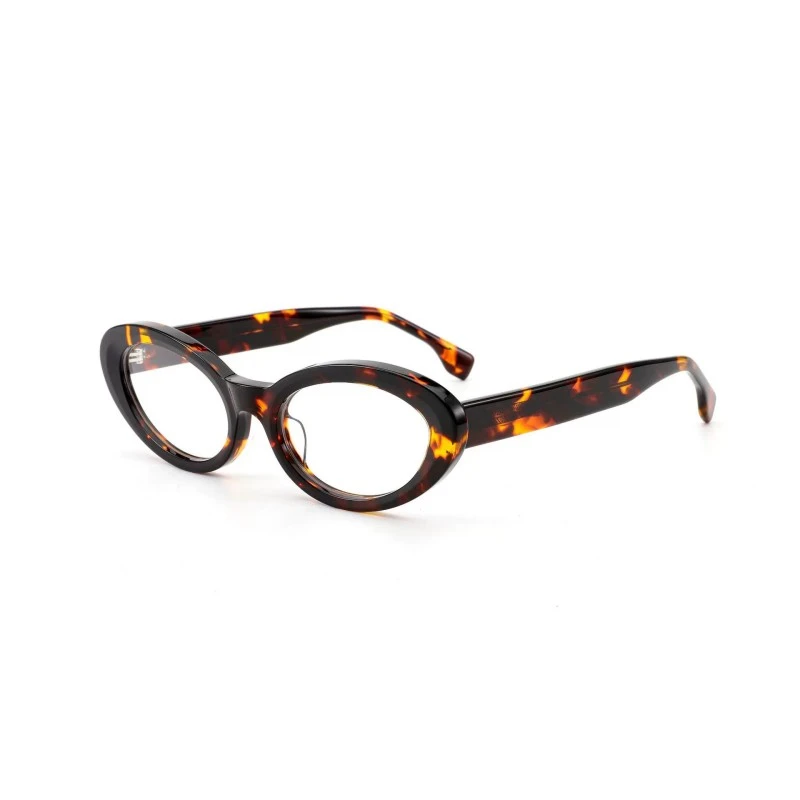
Most customers compare acetate frames with TR90 or ordinary injection plastic frames. Acetate frames are carved from solid sheets rather than injection molded. The major cost is not raw material, but labor work, yield rate and long production lead time.
2. Customer perception level
Customers benchmark acetate against injection plastics like TR90 and PC. To the naked eye, both look like plastic, but their manufacturing methods are totally different. TR90 is injection molded, one piece finished in seconds with mass mold production and little labor cost. Acetate is cut from solid acetate sheets, which most customers do not understand. That's why the price gap seems unreasonable.
It is hard for ordinary customers to tell the quality grade of acetate. They cannot distinguish low-grade local acetate sheets from premium imported sheets such as Italian Mazzucchelli or Japanese Murakami. They cannot judge curing time and layered texture only by appearance.
Customers do not recognize the value of handwork. They only see the finished product without knowing dozens of complicated manufacturing steps, so they think a frame is not worth such a high price.
3. Real production cost factors
High material cost & heavy waste Acetate is plant-based material made from cotton or wood pulp. The solid sheets require long curing aging. When CNC cuts out frame shapes, a large portion of the sheet becomes scrap, leading to low material utilization. Premium imported acetate sheets have much higher price than normal plastic pellets.
Many procedures and heavy reliance on hand polishing (main cost item, 25%-40% of total cost) One acetate frame goes through multiple stages: sheet cutting, CNC milling, tumbling for 24–72 hours, manual fine polishing (10–30 mins per frame), grooving, metal core embedding, hole drilling, hinge assembly, heating stress relief, shaping and full inspection. There are 20–50 steps in total. Hand polishing requires skilled workers and cannot be fully automated. Edges, inner surfaces and end pieces need polishing one by one. The yield rate is low; defective frames will be scrapped directly. Injection frames barely need hand polishing.
Long lead time & higher MOQ The production cycle of acetate frames is generally 30–70 days. Although we do not need expensive steel molds for new styles, the MOQ for each color is usually 300–500 pcs. Sampling and trial production cost is also higher than injection frames, so unit cost rises for small orders.
Higher cost of accessories & quality control High-quality acetate frames normally come with spring hinges and built-in metal cores to prevent breakage and deformation. We heat frames to release internal stress to avoid warping later, with multi-round QC inspection, which brings extra rework cost.
4. Value selling points to resolve price objections
✅ Plant-based cellulose material, hypoallergenic, less likely to cause skin allergy
✅ Multi-layer sheet structure with transparent layered patterns, while injection plastic has flat, dull color
✅ Can be heated to adjust temple angle to fit different face shapes (TR90 can hardly be reshaped) ✅ Good toughness, not easy to break from drops, better durability
✅ Solid, smooth & premium texture with retro luxury look, supporting higher retail price and better repeat purchase
5. Short reply for common customer objection
Customer: Why are acetate frames much more expensive than TR90?
Reply: TR90 is one-step injection molding. Acetate frames are CNC carved from solid sheets, plus long tumbling and frame-by-frame hand polishing. Higher cost on labor, material scrap and yield rate. Meanwhile, acetate has much better texture, adjustability and durability.