

Hey guys, I get this question literally every week—“Can I swap the temples on my black eyeglass frames?” And yeah, it’s such a common one, especially for folks who either scratched their current temples, hate the way they sit, or just want a little vibe change without buying a whole new pair. Before I break this down as a supplier who’s been handling acetate eyeglass frames for years, let’s get one thing straight: not all frames are made equal, and black temple swaps? They don’t work for every pair. I’ve seen customers try this and come back confused, so let’s get into the nitty-gritty.
First off, what even are temples? Those are the long, arm pieces that hook over your ears, right? On most modern glasses, they attach to the front frame (the part that holds your lenses) with small screws—usually one screw on each side near the hinge. That sounds simple enough, but the devil’s in the details. When it comes to swapping, the big thing is frame material. I work with acetate eyeglass frames almost exclusively (you can check out our full range here: /eyeglass-frames/acetate-eyeglass-frame/acetate-eyewear-frames.html) because they’re durable, customizable, and way more user-friendly than plastic or metal-only frames when it comes to parts swaps. Wait, but why does material matter so much?
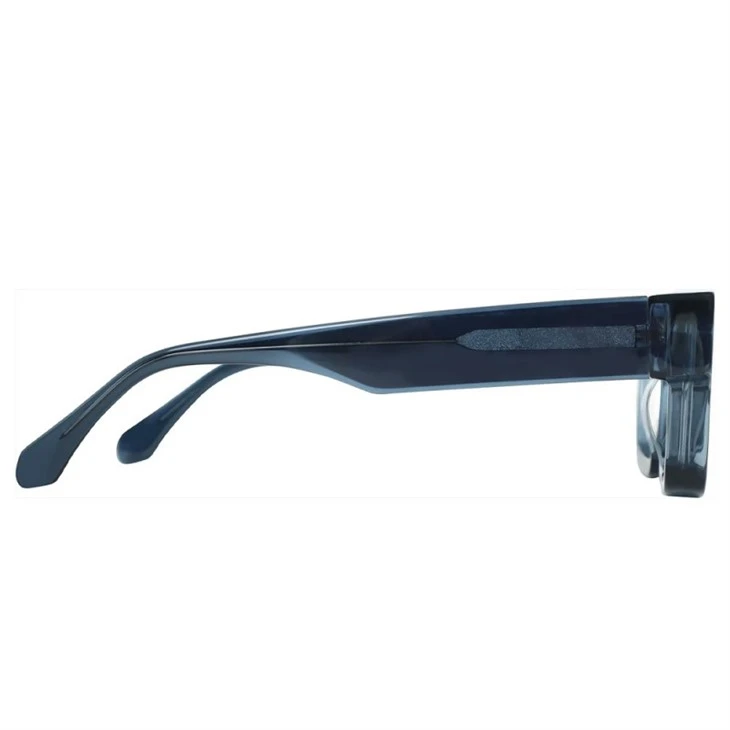

Let’s start with the doable scenario: if your black frames are acetate and have standard, screw-attached temples (not glued or fused), swapping is usually possible. Here’s the catch though—they have to be compatible sizes. Temple length, hinge width, and the screw type have to line up. For example, if your current temples are 145mm long and you grab a random set from a different frame, that’s a problem. I once had a customer come in with a pair of our square eyeglass frames (link right here: /eyeglass-frames/acetate-eyeglass-frame/square-eyeglass-frames.html) that he tried to swap temples on from a pair of cheap drugstore glasses—turns out the hinge holes were drilled in different places, and the screw was way too small. He ended up having to drill new holes in the frame, which scratched the black finish and voided any warranty. So pro tip: if you’re gonna swap, stick to temples from the same brand or same line of frames, especially if they’re our high quality optical glasses (check ’em out here: /eyeglass-frames/acetate-eyeglass-frame/high-quality-optical-glasses.html) since all their hinges are standardized.
Now, what isn’t possible? If your black frames have temples that are glued, melted, or fused to the front—those are no-go. Most mass-produced, super cheap frames use this method to cut costs, so swapping isn’t an option. Also, if you have titanium or metal frames with snap-on temples (no screws), those are usually a one-size-fits-all and not interchangeable. I always tell customers: if you can unscrew the hinge with a small Phillips head screwdriver, you’ve got a shot. If it looks like the temple is welded or melted to the frame? Save your time and money—you’ll just end up breaking the whole frame.
Wait, another thing people don’t think about: temple function. Temps aren’t just for looks—they have to fit your head. Even if the screws line up, if the new temples are too thin, too thick, or curve the wrong way, they’ll slip, dig into your ears, or make the glasses sit crookedly on your nose. Black temples vs. any other color? Same rule applies, but some people like black temples because they’re sleek, so swapping for another set lets you refresh the look without a new pair. I had a guy recently who swapped the black temples on his luxury eyeglass frames (link: /eyeglass-frames/acetate-eyeglass-frame/luxury-eyeglass-frames.html) for a set with a tiny little metal detail on the end—looked amazing, and he saved like $200 instead of buying a whole new luxury pair. That’s the win here, right?
But hold up, I can’t talk about swapping without addressing the risks, because as a supplier, I hate when customers mess up their frames. Let’s be real: even if the sizes line up, drilling or reusing hinge holes can weaken the frame. Acetate is pretty tough, but if you strip a screw or widen a hole, you risk the temple falling off mid-day. I always recommend taking your frame to a professional optician if you’re unsure—we work with a network of independent shops that can do temple swaps for a small fee, and they’ll make sure it’s done right so you don’t damage your black frames. A lot of people try to DIY it with a screwdriver from their junk drawer and end up stripping the screw or cracking the acetate, which is a total waste. Trust me, I’ve seen way too many customers come in with broken frames from bad DIY swaps.
Also, let’s talk about clear acetate frames for a sec—wait, why? Because some people might think clear is different, but the same temple swap rules apply! We get customers who buy our clear acetate frames (link: /eyeglass-frames/acetate-eyeglass-frame/clear-acetate-frames.html) and want to swap black temples to make them more bold, or swap clear temples for black if they want a neutral pair. Again, only if they’re screw-attached and compatible. I had a customer last month who did just that—swapped the clear temples on his clear frames for black ones, and it looked so sharp, like he had a totally new pair. No need to buy a whole new set, just a set of temples. That’s the beauty of acetate frames—they’re customizable, which is why we love them so much.
Wait, is there any case where swapping black temples is a bad idea? Let’s say your original temples have a custom angle for your face—like, if your ears are slightly higher or lower than average, the original temples are bent to fit. Swapping for a generic black temple might not sit right, even if the screws line up. That’s why again, sticking to same-brand temples is better—they’re made to match the frame’s original bend and fit. Also, if you have prescription lenses and swapping temples makes the frame sit crookedly, it can mess with your vision, which is a big deal. I always tell customers: if the swap changes the way the frame sits on your face at all, take it to an optician to adjust the nose pads too, so your vision stays clear.
Let me wrap this up with a quick checklist, because I know y’all love quick tips:
- Check if your temples are screw-attached (yes = maybe, no = no)
- Confirm temple length (match your original or same brand)
- Make sure hinge holes line up (or opt for a professional to drill)
- Only swap with compatible temples (same brand is safest)
- If unsure, hit up a pro instead of DIY
At the end of the day, swapping temples on black eyeglass frames is totally possible—if your frame is the right type (acetate, screw-attached) and you do it properly. It’s a great way to refresh your look without breaking the bank, or fix a pair with scratched temples instead of tossing them. If you’re looking to try this, or just want a pair of black frames with easy swaps, our whole line of acetate eyewear frames is here for you. Reach out to our team to chat more about compatible temples, pricing, or any questions you have about frame customization—we’re here to help. Don’t forget to check out our range of high quality optical glasses, square eyeglass frames, luxury eyeglass frames, clear acetate frames, and all the acetate eyewear you need.
References:
- American Academy of Ophthalmology. (2022). Eyeglass frame maintenance and customization guidelines.
- International Organization for Standardization. (2019). Ophthalmic optics – Spectacle frames – Requirements and test methods.
- Eyewear Design Association. (2021). Customization best practices for acetate eyewear components.
- Optical Retailers Association. (2023). Consumer guide to eyeglass part swaps and repairs.


